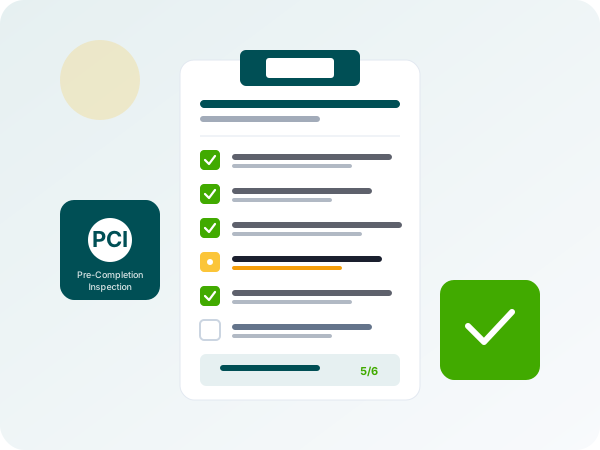

The pre-completion inspection - "PCI" - is the formal, documented walkthrough of a new build between the developer finishing the property and you legally owning it. Under the New Homes Quality Code, registered developers must offer one, and the buyer must be given a reasonable chance to identify defects before handing over the money. It is the single cleanest piece of leverage you will have in the whole process. It lasts between 45 minutes and two hours. It is worth preparing for it like you prepared for the mortgage interview.
What the PCI is (and what it is not)
The PCI is not a re-inspection of the survey, and it is not a negotiation about the price. It is a structured review of the finished property against a reasonable standard - every socket working, every door closing, every tap running, nothing obviously broken, nothing obviously missing. Anything that fails that standard is a defect the developer is expected to fix before completion or, where that is not possible, on an agreed timescale afterwards.
Before the visit: five things to bring
A phone with plenty of storage for photographs. Expect to take 80–150.
A spirit level (or a spirit-level app), a tape measure, and a small torch.
A phone charger to test every socket works.
A marble or small ball for testing how level floors actually are.
Your plans or brochure so you can confirm the finished property matches what you reserved.
The 30-point walkthrough
Outside the home (8 points)
Brickwork or render even, no cracks, consistent pointing
Roof tiles aligned, no slipped or missing tiles visible from ground
Gutters and downpipes fitted, clipped, falling correctly
Driveway and paths level, no standing water, no chipped edges
Garden or yard cleared, topsoil consistent, boundaries complete
Fencing and gates plumb, latches working, hinges secured
External taps, bin stores, and external lights functional
Windows and external doors sealed, consistent finish
Kitchen (6 points)
Every cabinet door closes flush, handles aligned, no scuffs
Worktop joints flush and sealed, no overhang errors
Every tap and every appliance connection running clean water
Hob, oven, extractor installed and tested
Every socket in the kitchen tested with your phone charger
Under-sink connections dry, no leaks, no smell of drains
Bathrooms and en-suites (5 points)
Every tile grouted, no cracked or chipped tiles, no lippage
Taps, showers, and flushes all working
Silicone sealant even and continuous around baths and basins
Extractor fans activate on the light switch or humidity
Hot water arriving hot within a reasonable time
Living areas and bedrooms (6 points)
Walls and ceilings smooth, no cracks, no visible plaster lines
Floors level, no creaks, no gaps at skirting
Every internal door closing without catching, handles aligned
Every window opening, closing, and locking properly
Every socket, every light fitting, every switch tested
Carpets, flooring, and transitions clean and finished
Services and systems (5 points)
Boiler commissioned, controls demonstrated, service book present
Every radiator heating evenly on a full cycle
Smoke, heat, and CO alarms tested and labelled
Consumer unit labelled, every circuit tested
Internet, TV, and phone points working or clearly ready for activation
After the inspection
Ask the site manager or inspector to sign the list on the day, or at minimum to acknowledge it in writing within 48 hours.
Agree a written timescale for each defect before you complete - "as soon as possible" is not a timescale.
Keep your own copy of every photograph and every note, in dated order.
If a defect is significant - anything affecting safety, weather-tightness, or heating - discuss delaying completion with your solicitor before signing.
Continue logging anything new that appears in the first six weeks - this is the peak period for snags to emerge.
Defects that appear after completion
A well-run PCI does not catch everything. Cracks from settlement, condensation issues, and heating performance quirks often only surface in the first few months. The Consumer Code and most structural warranties give you a two-year window to report these to the developer. Keep the record going: every new defect gets the same treatment - date-stamped, photographed, and logged.
Why a proper record matters
Most new builds have defects. That is normal. What distinguishes a buyer who gets theirs fixed quickly from one who does not is almost entirely the quality of their record. A list on paper gets ignored. A numbered, photo-evidenced, date-stamped, independently held record is very hard to ignore.
Defectly is built for this: one record per defect, photo-first, with every status change tracked. You take the photos on the day of the PCI and the record exists forever - exactly the format your developer's aftercare team, the New Homes Ombudsman, and your warranty provider expect.